The table layout at a wedding is a crucial step in getting your seating plan right, but it is often a real challenge. The layout can genuinely shape the wedding's atmosphere and create a unique, memorable ambience. Yet deciding which tables to choose, how to arrange them and where to seat each guest can quickly become a complex task while preparing for your big day.
Which wedding tables should you choose?
First of all, before deciding how to compose your tables, one of the key points is to choose your wedding tables. Rectangular, round or oval, each shape has its advantages and drawbacks. Choosing your tables is therefore ESSENTIAL.
Rectangular tables
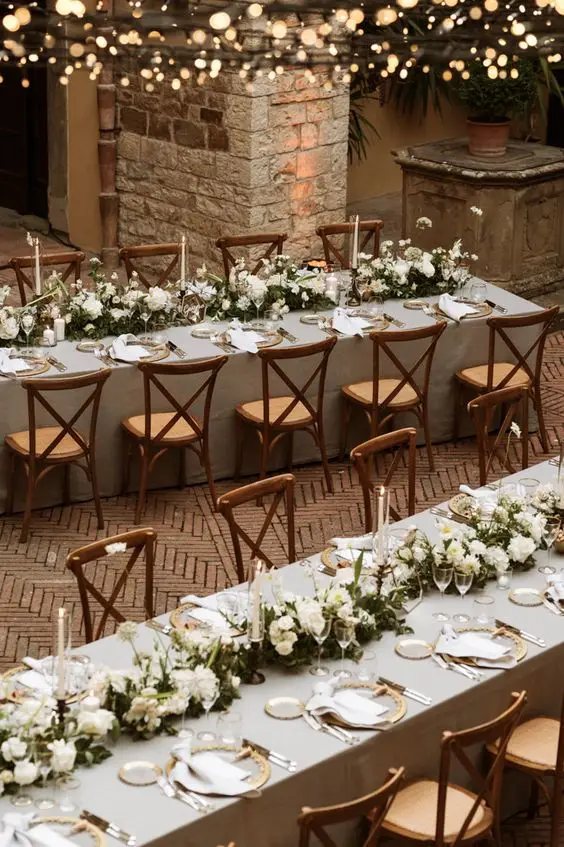
Rectangular tables are very popular because they are remarkably efficient for seating at a wedding. With their welcoming shape, they embody the very essence of conviviality, inviting guests to gather around them.
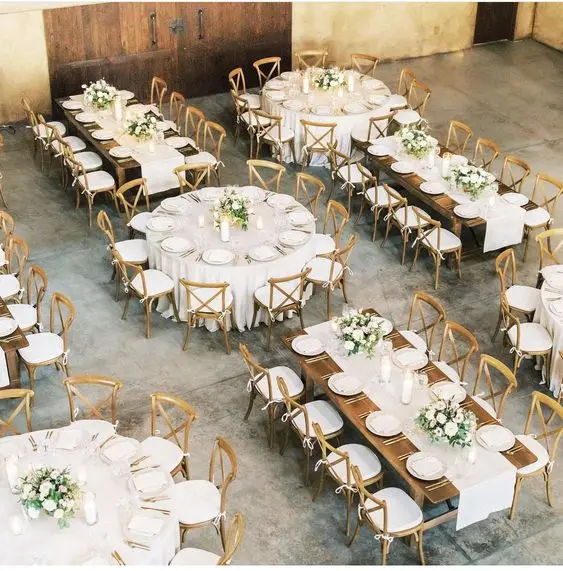
Usually seating between 6 and 10 people, these tables are ideal for an outdoor banquet, paired with benches to keep that convivial feel. Indoors, the benches are generally replaced by chairs to make moving around easier and add a touch of elegance to the reception. The advantages are many: rectangular tables make the best use of space, especially in long rooms. Their flexible configuration offers a variety of layouts: a U, a T, a herringbone… the options are endless.
Their large surface also offers plenty of opportunities for decoration, letting you create settings that will impress your guests. There are, however, a few drawbacks to consider. Convivial as they are, these tables can make conversation difficult with guests sitting at the far end because of their length. And an oversized centrepiece may get in the way of guests in the middle of the table, blocking their view of the top table and the festivities.
Round tables
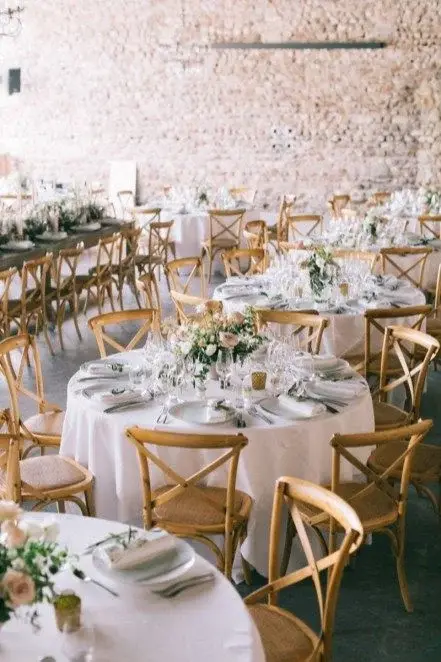
Round tables are couples' favourites thanks to their elegance and above all their tendency to encourage conversation between guests. Their layout lets everyone see each other, making communication and exchanges easier. Seating between 6 and 12 guests depending on their diameter, round tables offer a flexibility that makes them perfectly suited to the specific needs of each wedding. Their many advantages make them a popular choice. Round tables allow better circulation around the room, so guests can move about easily. Their circular shape also encourages conversation and conviviality without anyone needing to turn around to talk. Finally, their round shape gives everyone a clear view of the top table and the festivities.
Decoration, however, can be a drawback to bear in mind… It is important to think of a centrepiece that is both attractive and discreet so it doesn't get in the way. Round tables can also take up more space in the room because of their diameter. So it is essential to take precise measurements of the reception room to avoid any surprises on the wedding day.
Oval tables
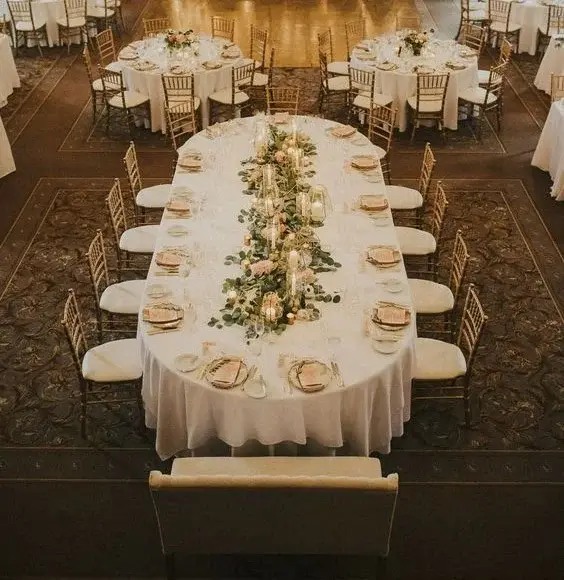
Oval tables are the perfect alternative, combining the elegance of round tables with the practicality of rectangular ones. Seating a variable number of guests, usually between 6 and 10, these tables adapt easily to groups of different sizes, offering a flexibility that is much appreciated when planning the seating. They offer a host of advantages.
Their elongated shape makes the most of the space, easing guests' movement and making conversation simpler. These tables also allow for variety in decoration, with room for centrepieces or more linear decorative elements.
However, these tables are rarely available, or even offered, for hire, and because of their rarity they often cost more than their round or rectangular counterparts.
How to lay out your wedding tables?
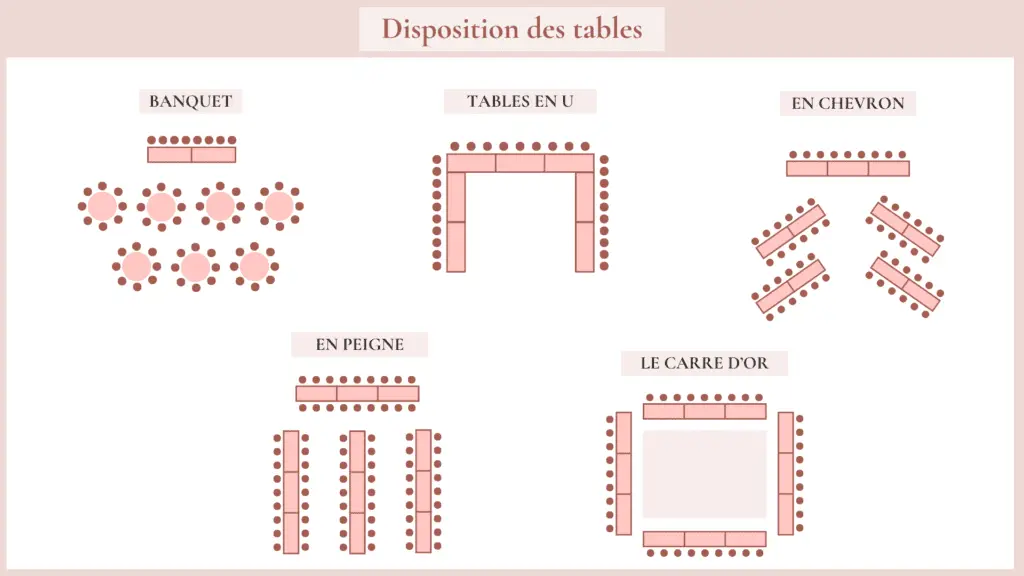
The other essential aspect of your wedding seating plan is the choice of table layout. This layout is a key element that will have a significant impact on the atmosphere of your reception. A U shape, a banquet layout, a herringbone… there are many options.
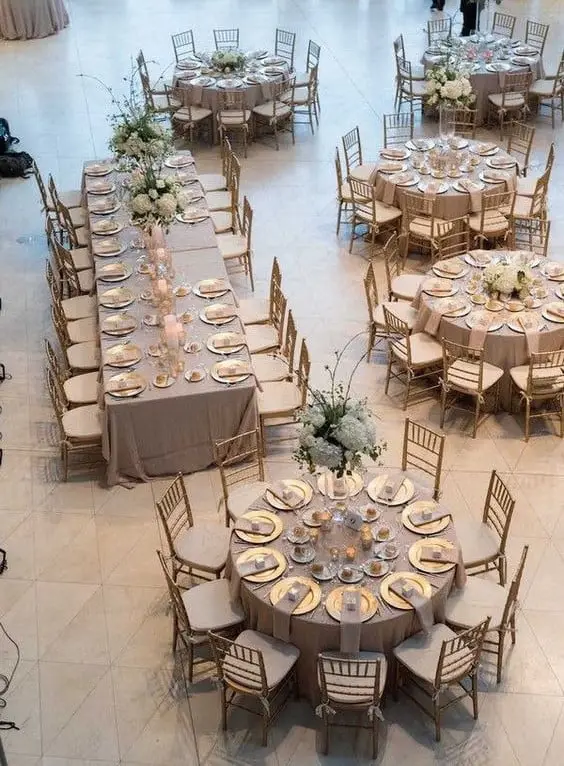
Banquet style
The banquet layout is generally the one most chosen by couples. The guests' round tables draw the eye towards the top table, placed at the front of the room so it stands out. Thanks to their round shape, the tables encourage conversation and conviviality between guests. However, as round tables take up more space, it is essential to know the dimensions of the reception room.
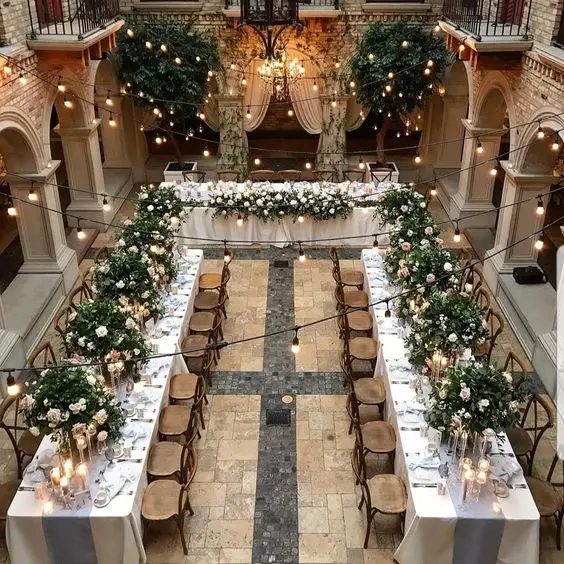
U-shaped tables
The U-shaped layout is particularly suited to rectangular rooms, with the top table placed at the centre of the U. This layout offers a panoramic view of all the guests, creating a warm atmosphere and making everyone feel included. The U-shaped table also allows easier circulation for guests and serving staff alike. However, this configuration can have drawbacks at a wedding with a large number of guests, as it can create greater distances between them.
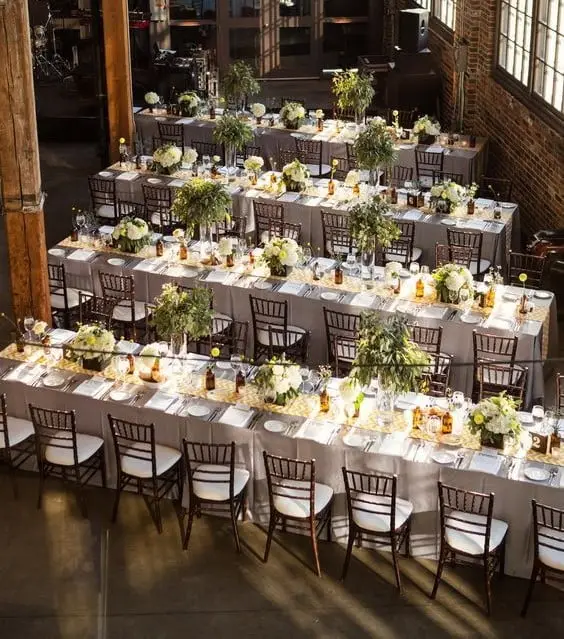
Herringbone
The herringbone layout is quite an original option for a wedding. Tables arranged in V shapes draw the eye towards the centre of the room, highlighting the top table. Note, though, that this configuration needs a sufficiently spacious room to avoid feeling cramped. So it is important to know the dimensions of your reception venue well.
Comb layout
The comb layout is the best option for a large wedding. Tables set out in straight lines, with the top table at the centre, naturally draw the eye to the front of the room. The comb arrangement encourages conversation between guests, creating a convivial, festive atmosphere at the reception. Because of the length of the tables, however, you must take the dimensions of your reception venue into account.
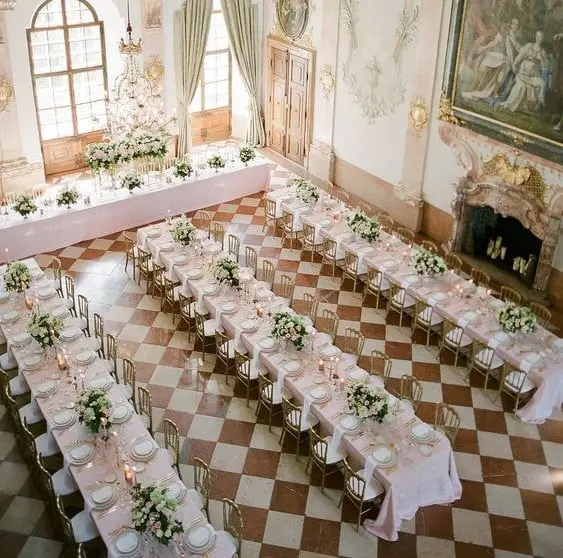
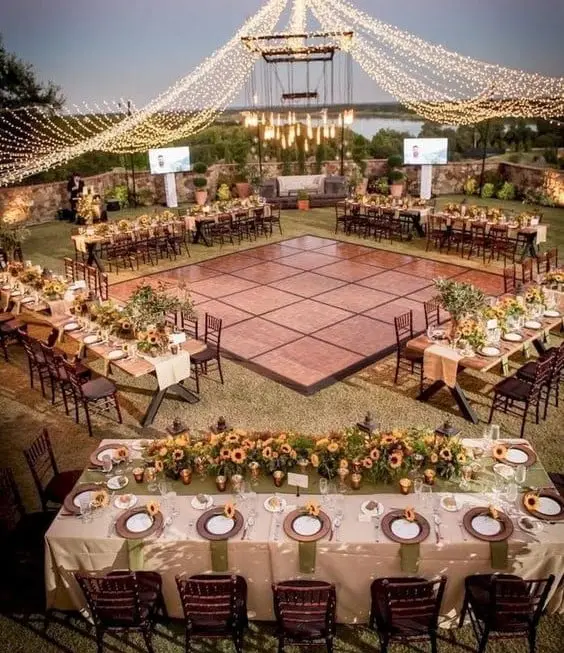
The hollow square
The hollow square layout brings a touch of originality to the reception. Rectangular tables are arranged in a square or rectangle, creating a central space for the dance floor. This arrangement also makes it easier for guests and serving staff to move around. However, the hollow square needs a spacious room to avoid the tables being too tightly packed. The layout can also feel a little more formal and less relaxed, so it is important to think carefully about the atmosphere you want for your wedding.
A few details to plan ahead!
Once you have chosen your tables and their layout, the reception room finally takes shape. But there are still a few points you need to plan ahead.
This is particularly true of the evening party that will carry the rest of the wedding. Beyond the table layout, it is essential not to overlook the key elements that will bring your evening to life: the late bar and the dance floor. These should be placed in a free-flowing area, close to each other. Guests should be able to reach them easily without zigzagging between the tables. Because the success of a reception often lies in the details of its organisation.
Key tips:
Who to seat next to whom?
This is THE most important point of the seating plan. Always seat at least two people who know each other at every table so none of your guests ends up alone. Don't hesitate to seat your guests according to age, affinities and interests.
To keep the atmosphere harmonious, though, keep an eye on the "strong personalities" around you so you don't seat them at the same table and avoid any family or friendship conflicts.
Mistakes to avoid!
For a perfect seating plan, it is vital to avoid a few common mistakes, such as seating elderly guests near the speakers, which could disturb them, or separating a couple. It is also wise not to group all the single guests at one table, to avoid a "speed dating" atmosphere, and conversely not to seat a single person among couples, so they don't feel like a third wheel.
Ask your parents and in-laws for help
Don't hesitate to delegate some tables to your parents and in-laws, especially if they have invited some of their own relatives and friends. Involving them in the preparations will free you of some responsibilities, and they will be delighted to lend a hand.
Assigned seats or not?
It is crucial to decide whether you prefer to give each of your guests a specific seat or simply assign them a table, leaving them free to choose their seat at it.
What about the children?
It is essential to take the children into account. They often eat together with babysitters during the drinks reception. And take care not to isolate a teenager by seating them alone at the children's table; seat them next to young adults instead.
My role?
As a wedding planner and designer based in the Bordeaux region, my aim is to accompany you through the preparations for your big day. I am committed to fully meeting your needs and wishes while giving you sound advice. My goal is to put my tailor-made services to work to create a fully personalised wedding that reflects you. Setting up the reception room can sometimes be complex, which is why I am here to help you make the right choices of tables, layout and seating plan, making sure every detail is carefully considered. I am by your side at every stage of the planning to ensure your wedding lives up to your expectations and perfectly reflects your vision.